


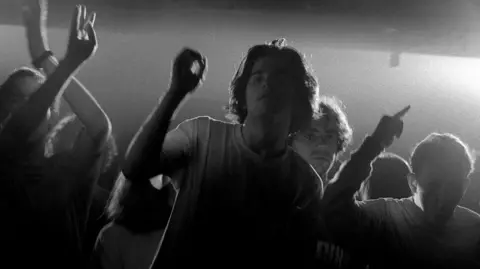
In the late 1980s and early 90s, Manchester was a city transformed by sound.
Over a short yet impactful era, sound, style and substances all became entangled to make the city - nicknamed the Madchester scene - the destination everyone wanted to be.
"There was a time where about a third of the office would go to Manchester every Friday night," noted a former NME journalist and radio presenter. "They would simply relocate north and you wouldn't see them again until Tuesday or Wednesday the next week, appearing rather worse for wear."
The second summer of love - so it was called - burned bright for several years, spanning iconic venues like the Hacienda, before burning out... setting the stage for the Britpop movement.
Fast forward 35 years, Manchester appears to be having a fresh chapter, in musical terms, as a host of creatives, audiences and execs once again head north.
A Gathering of Prestigious Awards
In recent weeks, the city welcomed the Brit Awards - taking the event out of London for the first time in its close to five-decade run.
This coming Thursday, the state-of-the-art Co-op Live venue - which has already been scheduled for the Brits again for next year - will also be the setting for the Music of Black Origin Awards for the first occasion.
Starting Wednesday and concluding Saturday, the 6 Music Festival comes back to its now fixed Manchester base.
Is this a sign of Manchester reclaim its prominence as the UK's musical hotspot?
'Change in Dynamics'
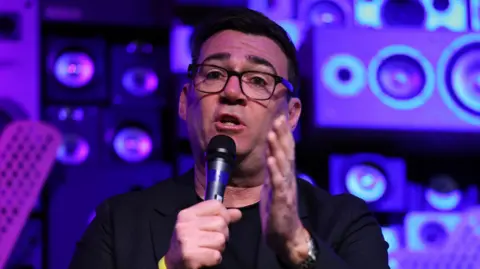
The Mayor of Greater Manchester believes this is the case.
He observes that "at last, there is a transfer of dynamism, with vitality moving into Manchester".
He adds: "This goes beyond those big events coming, a growing amount of up-and-coming creatives is opting to call Greater Manchester their headquarters."
He acknowledges the music industry body which runs the Brits for having staged a number of local supporting activities in the city.
"The Brits did more than just come and put on a show," he says. "They built bridges into local areas."
The UK's "big three" record labels are all still London-based. The mayor states he'd "like to see a big label to have a significant operation here in the city".
His proposal last week of the introduction of nocturnal transport from the city centre is, according to a music venues campaigner, "a fantastic development" for concert-goers and clubs both.
'Special Ingredient'
Even though some parts of Manchester are still among the more disadvantaged regions, it is known as one of the quickest developing city-region economies in the country.
A venue director who moved up from London five years ago, formerly of a major London arena, said bringing the Brits to Manchester was "the top priority" when unveiling the biggest new indoor arena in Europe.
"It has undoubtedly injected fresh energy into the event, being up here," she said of the event, which reportedly drew a record global audience.
Whilst big events can be "lost" in a massive metropolis like London, she says, the "unique charm" that Manchester brings - including art trails and musician voiceovers on trams - "was fully expressed".
The "off-the-scale impact" of having the Brits "embraced by" Manchester was also underscored.
The "top-tier venues", combined with its "historic artistic dynamism" and sonic legacy made the move north feel like "a natural next step".
'Sustainable Growth'
The MOBO Awards have ventured beyond London before. Over the past decade, it has made its way up north to the likes of Leeds, Liverpool and Newcastle.
Northern artist Aitch is up for best hip-hop artist at this year's ceremony in his city of origin, where he will also take to the stage.
Aitch was found as a youngster by a city entrepreneur, while performing at a local open mic night.

He decided early on to avoid the lure of London and to run his music business from Manchester, a place which he said "possesses a unique quality" that "is impossible to copy elsewhere".
"The most important thing is that sustainable growth," he said.
He believes the current excitement around the city has been "testament" to the decision he made to stay, a decade ago.
'Spanning the Ages'
But there is still a steep hill to climb, as a Mancunian singer points out.
The musician on the lineup thinks it's great that Manchester is "receiving attention". But, she asks: "What number of artists from the north are actually getting nominated?"
Only one of this year's BRITs nominees up for awards actually came from Greater Manchester.
And beyond Aitch, there are only a few of northerners up for MOBO awards this year too.
The artist thinks there is still a "discrepancy" between the investment in local music scenes in the north and south.
"Furthermore, she alerts to the 'peril' of 'just taking something out of London and just dropping it into Manchester and assuming it's going to work' when 'the local culture is entirely distinct'."
If the music world is relocating from London again this week, then it needs to "contribute to the region", she adds, and not just pay it "lip service".

The singer will perform at a renowned local spot for the event's introducing evening. She has recently performed with local icons and underlines the "genuinely spanning ages" and "cooperative" make-up of the city.
"I am undoubtedly a member of a fresh Manchester movement, but that's been supported by the old guard, for sure."
Events like last month's community lab were "fantastic", she adds, at "trying to integrate into the local scene of the city".
The location puts on gigs but also runs music education programmes, training people for careers in jobs like sound engineering.
A venue director agrees it's great for Manchester to be getting these huge global ceremonies, but at the same time he says: "I question whether this alleged revival ever actually faded from Manchester".
"There's been a continuous development of innovative spirit in this city for 50 years."


